Danderyd Hospital
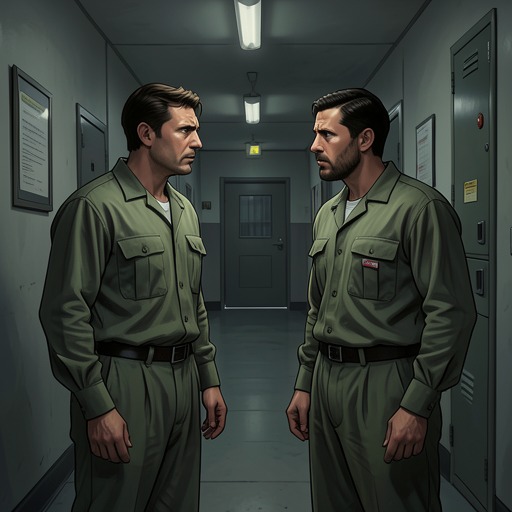
Three SecondsDanderyd Hospital is the setting for Ewert Grens and Sven Sundkvist’s interviews with prison warden Martin Jacobson after the fire at Aspsås prison’s workshop. A familiar workplace for the two detectives, it becomes a point of transition between the rescue and the investigation: Jacobson’s account of Hoffmann’s phone calls helps Grens piece together what happened during the crisis.
Setting and Familiarity
The hospital’s intensive-care corridor has yellow walls and a light-blue floor. On this morning it is quiet, unlike the evenings and weekends Grens and Sundkvist remember from earlier work visits, when injured people arrived after alcohol, football matches, or snowy roads had brought emergencies. The calm setting gives their visit a measured, investigative character.
Grens and Sundkvist return the nurses’ friendly smiles. Their familiarity with the hospital contrasts with the purpose of this visit: they have come not to attend an ordinary callout, but to question a survivor from the prison siege.
Jacobson’s Rescue and Interview
Fire and rescue crews search the burned-out workshop for a long time before hearing faint sounds beneath the rubble. They find Jacobson alive, and he is taken to Danderyd Hospital. Grens and Sundkvist arrive after going first to the Svea Life Guards Camp at Kungsängen; at the bedside, Sundkvist moves a stool so that he can speak to Jacobson at eye level while Grens stands by the window.
Jacobson recognizes Grens, who has visited the prison where the warden has worked throughout his career. He asks that the detectives be left alone with him, while Grens says he will remain for medical reasons. Their conversation takes place within the practical limits of Jacobson’s condition, but he is able to provide an account of the hostage-taker’s movements.
The Phone Calls and the Investigation
After the interview, Grens and Sundkvist eat at the hospital entrance café: bitter tea and a white-bread sandwich with meatballs and beetroot salad. They sit in silence, with Jacobson’s answers as their company. His account is specific: Hoffmann went twice to the office at the back of the workshop and used its phone, once near the beginning of the crisis and again shortly before the explosion.
Jacobson had been kept in view through the glass partition while Hoffmann made the calls. He also recalls Hoffmann warning the hostages not to move and backing toward the office with a gun pointed at them on the first occasion. On the second, just before the explosion, Jacobson noticed that Hoffmann seemed nervous. The hospital interview therefore gives the detectives more than a timeline: it identifies two brief moments when Hoffmann left the hostages and offers a rare indication of uncertainty during an otherwise controlled operation.
Narrative Significance
Danderyd Hospital links the physical aftermath of the workshop fire to the continuing police inquiry. Jacobson’s survival makes testimony possible; his observations turn the two calls into investigative facts. The account also shifts attention from the visible hostage drama to Hoffmann’s less conspicuous actions in the office, which Grens carries back to Aspsås as the investigation proceeds.